

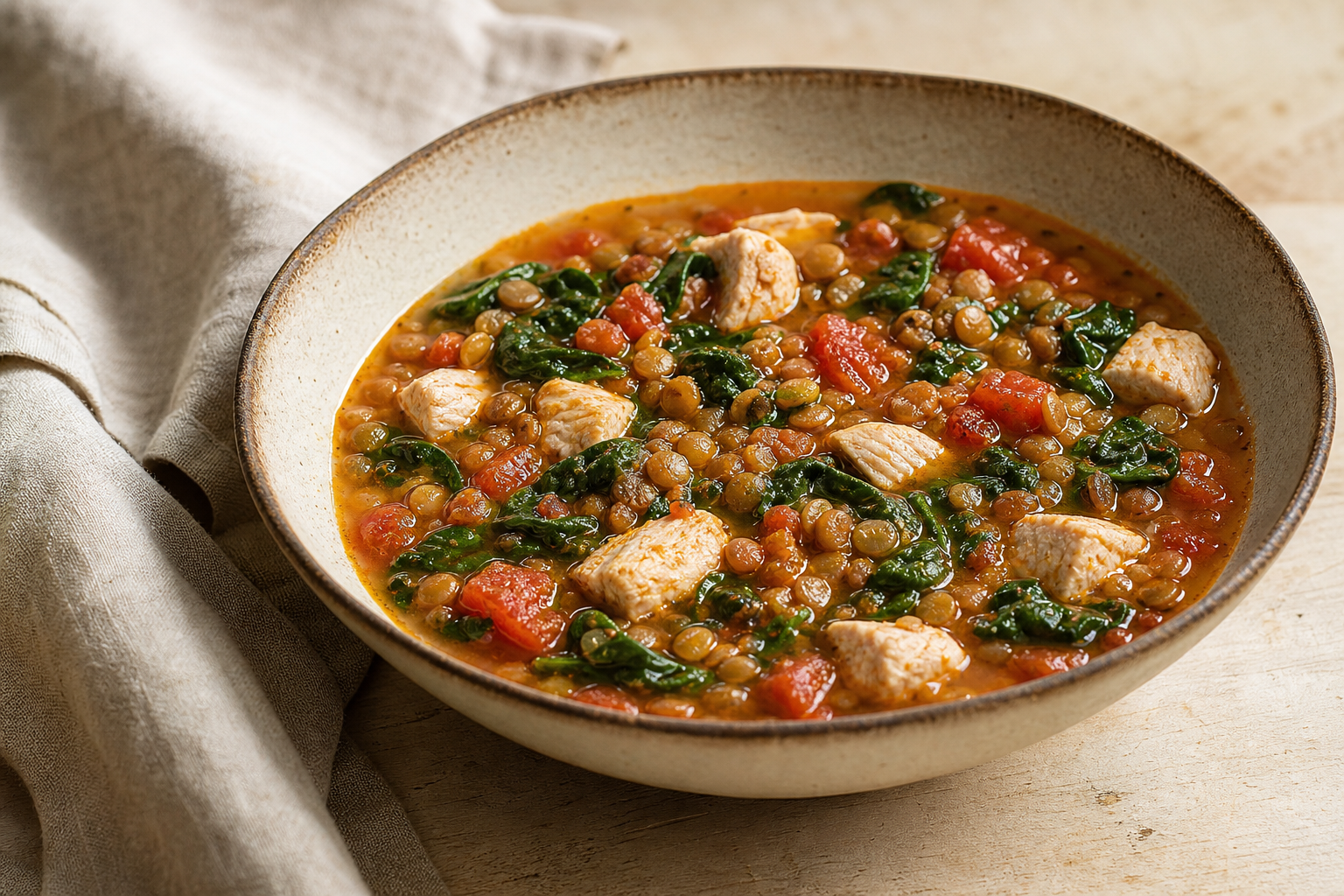
Lentils are the center of this warm lunch, bringing pulse fiber, plant protein, and texture to a tomato and spinach soup. Cooked chicken makes the bowl more substantial, while a small amount of olive oil rounds out the meal.
Why this combination works
Lentils provide fermentable fiber and resistant starch as well as plant protein. Tomato and spinach increase vegetable volume without making the soup heavy, and cooked chicken turns it into a complete lunch.
- Cooked or canned lentils keep the preparation time short.
- The soup is suitable for meal prep and reheats well.
- If pulses are new to your routine, begin with a smaller lentil portion and increase gradually.
Ingredients
- 120 g cooked lentils
- 180 g chopped tomato
- 120 g spinach
- 80 g cooked chicken breast, cut into pieces
- 1 teaspoon olive oil
- 250 ml water or unsalted stock
Method
- Combine the lentils, tomato, chicken, and water or stock in a saucepan. Bring to a gentle simmer and cook for eight to ten minutes.
- Stir in the spinach and cook until wilted, one to two minutes. Remove from the heat, drizzle with olive oil, and serve.
Nutrition note
Nutrition varies with lentil variety, stock, and chicken portions. Lentils contribute pulse fiber and plant protein, vegetables add volume, and chicken supplies additional protein.
Rinse canned lentils and choose unsalted or low-sodium liquid if sodium intake is a concern.
Evidence notes
Systematic reviews have examined how beans and pulses affect microbial populations in the human gut, and other research discusses the prebiotic potential of their resistant starch. Results vary by pulse, preparation, dose, and person; one bowl should not be treated as a microbiome intervention.
References
- A systematic review of the effect of dietary pulses on microbial populations inhabiting the human gut. Beneficial Microbes, 2020.
- Prebiotic Potential of Dietary Beans and Pulses and Their Resistant Starch for Aging-Associated Gut and Metabolic Health. Nutrients, 2022.
- The Impact of Dietary Fiber on Gut Microbiota in Host Health and Disease. Cell Host & Microbe, 2018.
- Carbohydrate quality and human health: a series of systematic reviews and meta-analyses. The Lancet, 2019.
Editorial note: This recipe is general food and nutrition information, not medical advice. Pulse tolerance varies; persistent digestive symptoms warrant evaluation by a qualified clinician.