

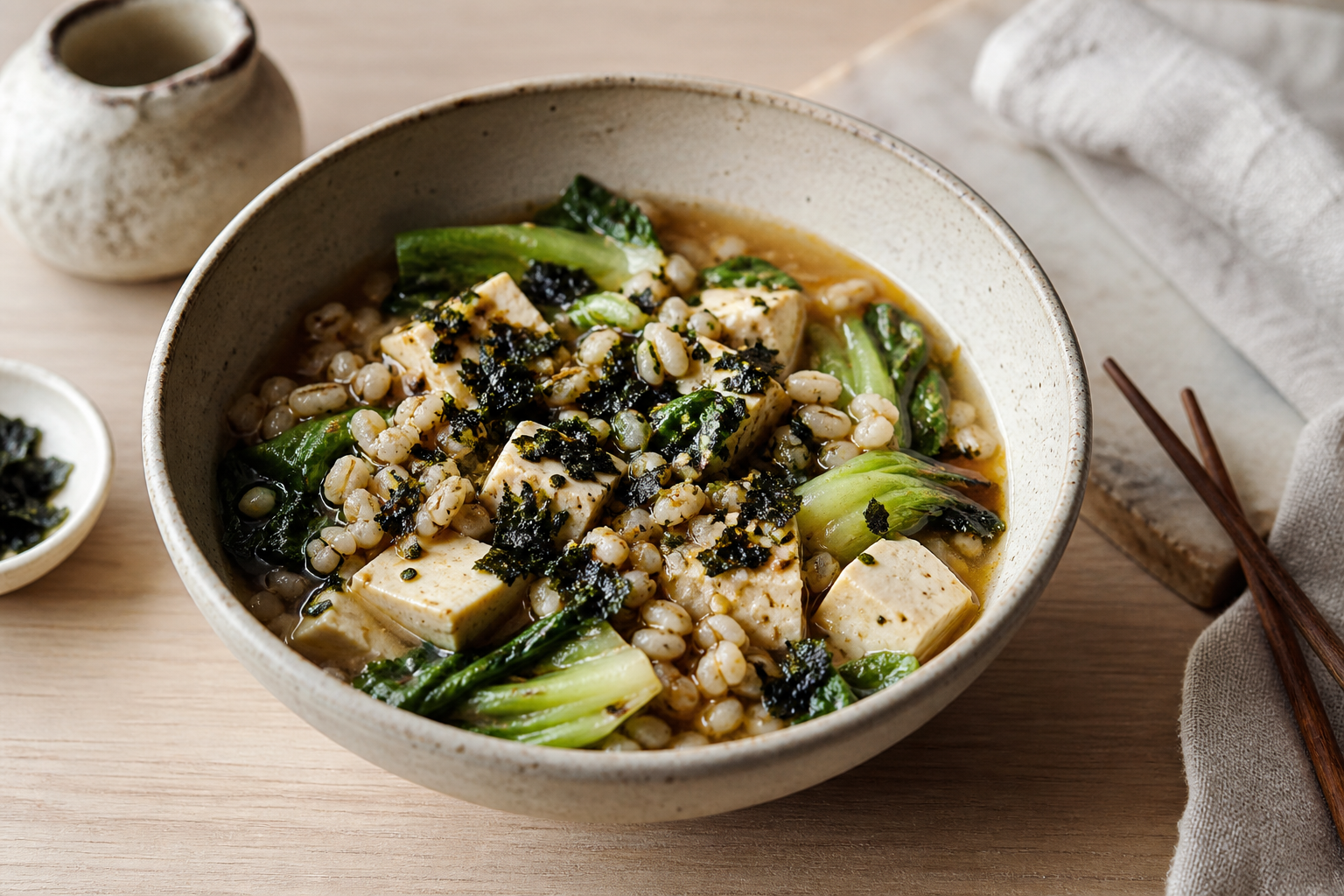
This warm bowl is built for mornings when a cold or sweet breakfast does not appeal. Barley supplies whole-grain fiber, tofu provides plant protein, bok choy adds vegetable volume, and a small amount of miso contributes savory fermented flavor.
Why this combination works
Barley contains beta-glucan fiber and makes a useful base for a savory grain bowl. Tofu rounds out the protein, while greens and nori introduce additional plant ingredients. Stirring in miso after removing the pan from direct heat preserves its fresh flavor and makes it easier to control the amount used.
- A warm, savory format offers an alternative to sweet breakfast recipes.
- Cooked barley can be prepared in advance to keep the active cooking time short.
- Using a measured teaspoon of low-sodium miso keeps the seasoning restrained.
Ingredients
- 120 g cooked barley
- 150 g soft tofu, cut into cubes
- 1 small bunch bok choy, chopped
- 1 teaspoon low-sodium miso
- Nori flakes, to finish
- Water, as needed
Method
- Warm the cooked barley with a small splash of water in a saucepan. Add the tofu and bok choy, cover, and cook gently until the greens soften and everything is hot.
- Remove from the heat. Loosen the miso with a spoonful of warm cooking liquid, stir it into the bowl, and finish with nori flakes.
Nutrition note
Nutrition depends on the tofu, barley, and miso products selected. Barley and greens contribute fiber, while tofu supplies plant protein.
Miso is still a source of sodium. “Low sodium” is relative, so use the label and your individual dietary needs to guide the amount.
Evidence notes
Barley beta-glucan and dietary fiber have a substantial research literature. Fermented foods are also actively studied, but clinical evidence differs markedly by food. A major review found limited human gastrointestinal evidence for many fermented foods and no randomized trials for miso at the time of publication; here, miso is used primarily as a measured flavoring.
References
- Fermented Foods: Definitions and Characteristics, Impact on the Gut Microbiota and Effects on Gastrointestinal Health and Disease. Nutrients, 2019.
- Soy and Gut Microbiota: Interaction and Implication for Human Health. Journal of Agricultural and Food Chemistry, 2016.
- The Impact of Dietary Fiber on Gut Microbiota in Host Health and Disease. Cell Host & Microbe, 2018.
- A critical review on the impacts of beta-glucans on gut microbiota and human health. Journal of Nutritional Biochemistry, 2018.
Editorial note: This recipe is general food and nutrition information, not medical advice. Adapt sodium, fiber, and soy intake for allergies, intolerances, or clinician-directed diets.