

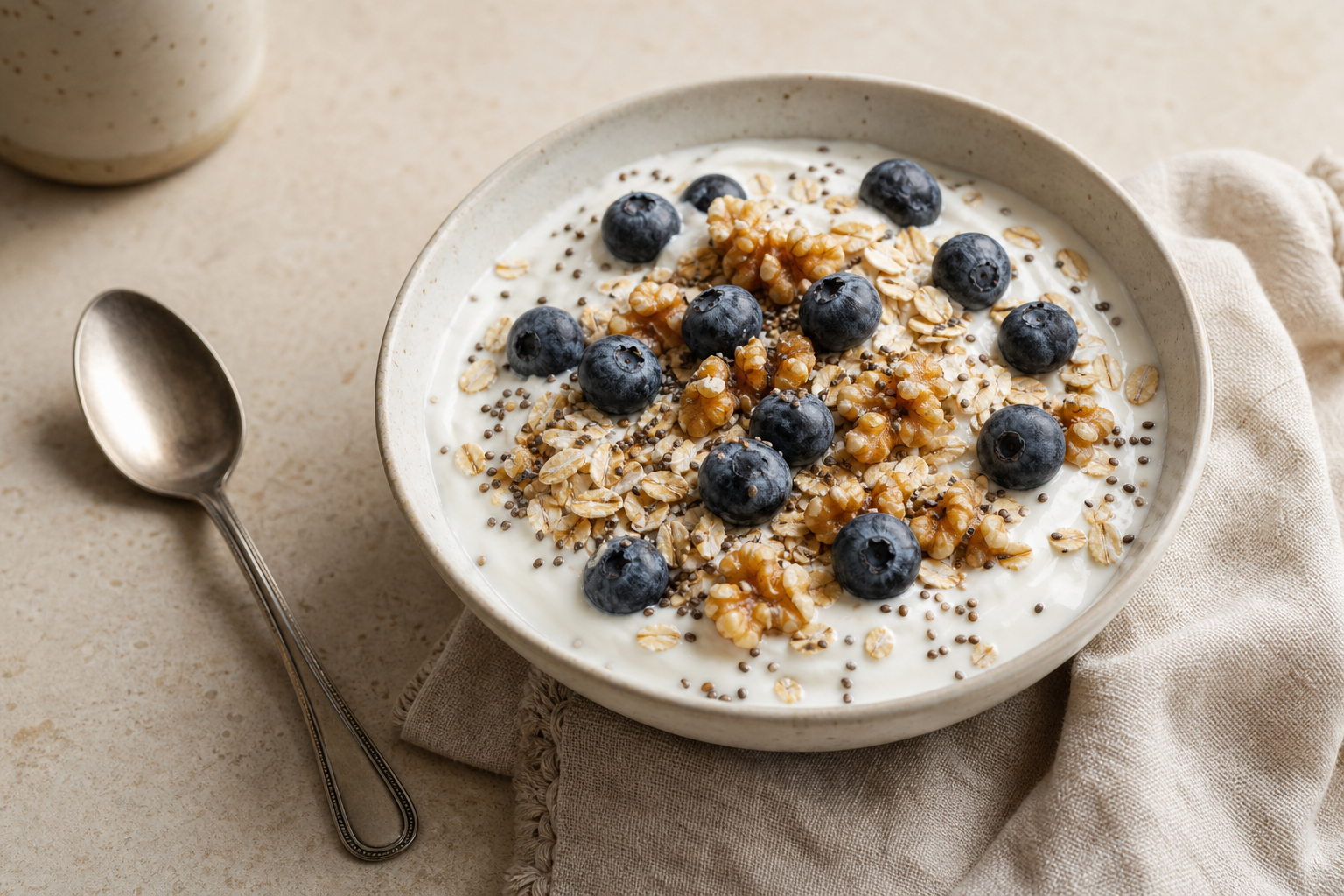
Fermented dairy, whole-grain oats, seeds, berries, and nuts share one bowl in this practical breakfast. The value is not a single “superfood,” but a repeatable structure that combines protein, fiber, and several plant ingredients without added sugar.
Why this combination works
Greek yogurt provides a familiar fermented-food base and substantial protein. Oats and chia seeds contribute soluble and fermentable fibers, while blueberries and walnuts broaden the range of plant foods in the meal.
- Oats, chia seeds, berries, and walnuts make this a fiber-forward breakfast without a long preparation time.
- Yogurt and oats pair fermented food with whole-grain fiber.
- Walnuts and blueberries add texture, unsaturated fat, and plant variety so the bowl is more balanced than a refined-carbohydrate breakfast alone.
Ingredients
- 170 g plain Greek yogurt
- 35 g quick oats
- 70 g blueberries
- 10 g walnuts, roughly broken
- 6 g chia seeds
Method
- Spoon the yogurt into a bowl, then add the oats and blueberries.
- Scatter over the walnuts and chia seeds. Let the bowl stand for three minutes to soften the oats slightly, then serve.
Nutrition note
Nutrition varies with the yogurt and oat products used. Greek yogurt contributes protein, while oats, chia seeds, blueberries, and walnuts supply a mix of fiber-containing plant foods.
The broader design principle is a breakfast built from whole grains, fermented food, fruit, nuts, and seeds—not reliance on any one ingredient.
Evidence notes
Human dietary-intervention research has examined fermented-food and high-fiber dietary patterns, while reviews describe how different dietary fibers interact with the gastrointestinal microbiota. These sources support the meal’s general rationale; they do not establish that this individual recipe prevents or treats a health condition.
References
- Gut-microbiota-targeted diets modulate human immune status. Cell, 2021.
- Fermented Foods: Definitions and Characteristics, Impact on the Gut Microbiota and Effects on Gastrointestinal Health and Disease. Nutrients, 2019.
- The Impact of Dietary Fiber on Gut Microbiota in Host Health and Disease. Cell Host & Microbe, 2018.
- Dietary fiber and prebiotics and the gastrointestinal microbiota. Gut Microbes, 2017.
- A critical review on the impacts of beta-glucans on gut microbiota and human health. Journal of Nutritional Biochemistry, 2018.
Editorial note: This recipe is general food and nutrition information, not medical advice. Increase fiber gradually if your usual intake is low, and adapt ingredients for allergies, intolerances, or clinician-directed diets.